Impact of correct grommet placement: reducing end-customer complaints and returns
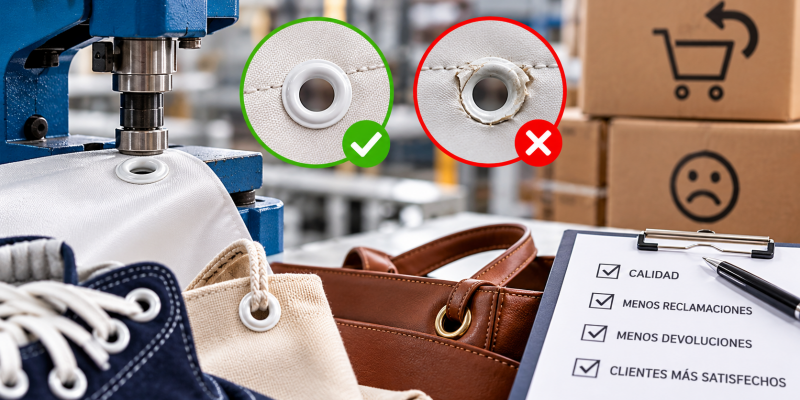
A small fault in the grommets can become a major problem once the product is already in the customer’s hands. In footwear, leather goods and garment manufacturing, a part that is poorly aligned, badly fixed or fitted with excessive pressure not only affects the final appearance, but also compromises strength, functionality and the perception of quality. What may look like a minor misalignment in the factory can end up becoming claims, returns, rework and brand damage in the market.
This happens because the end consumer does not judge the process, but the result. If a lace does not slide properly through a boot, if a bag has a deformed washer or if a garment shows visible tension around the perforation, the immediate impression is that the product has been poorly made. Perceived quality can be lost in seconds, and recovering it afterwards usually costs far more than preventing the defect from the production line.
In industrial environments where long production runs, tight deadlines and very different materials are involved, fitting these components cannot be treated as a secondary operation. It requires uniformity, repeatability and control, because any variation from one unit to another ends up creating visible differences in the finish or, even worse, functional failures that appear during use.
That is why real prevention begins before packaging and even before inspecting the finished batch. The most profitable way to reduce incidents is to stop them from occurring in the first place, and that depends on the machinery, the process settings and the ability to maintain consistent fitting in every manufactured reference.
What grommets reveal about the real quality of a product
When grommets are fitted correctly, the product conveys order, solidity and care at first glance. However, when they appear off-centre or unevenly closed, the defect is immediately visible and is often accompanied by deeper problems. It is not just a matter of appearance, because poor fixing can cause detachment, looseness, tears in the material or friction during use.
In footwear, for example, incorrect positioning can alter the path of the lace and create uneven tension across the instep. The result may be a boot that looks right in the warehouse, but starts to fail as soon as the user tightens it several times. In leather goods, poor fitting on handles, fastenings or decorative elements can end up damaging leather, synthetic materials or sensitive textiles, especially when the pressure is not properly adapted to the thickness or rigidity of the material.
Something similar happens in garment manufacturing with technical clothing, corsetry, uniforms or promotional items. If the perforation is not clean, if the finishing does not sit evenly or if the surrounding area shows marks, the defect affects the professional finish of the item and makes order acceptance more difficult. The problem is not only that one unit is defective, but that inconsistency between pieces weakens the entire batch.
There are signs that should be monitored before the product reaches the customer. These include visual differences between supposedly identical pieces, poorly closed edges, deformation around the fitting point, abnormal movement of the part once fixed or micro-tears that appear when handling the item. Checking these indicators during production helps detect deviations in time and prevents final inspection from becoming the first real alarm.
It is also important to observe the process, not just the finished part. If there are frequent material changes, variable thicknesses or unstable manual adjustments, the margin for error increases. That is why many companies review the applied pressure, tool alignment, feed regularity and repetition of the operating gesture, because a reliable finish is almost always the result of a stable process.
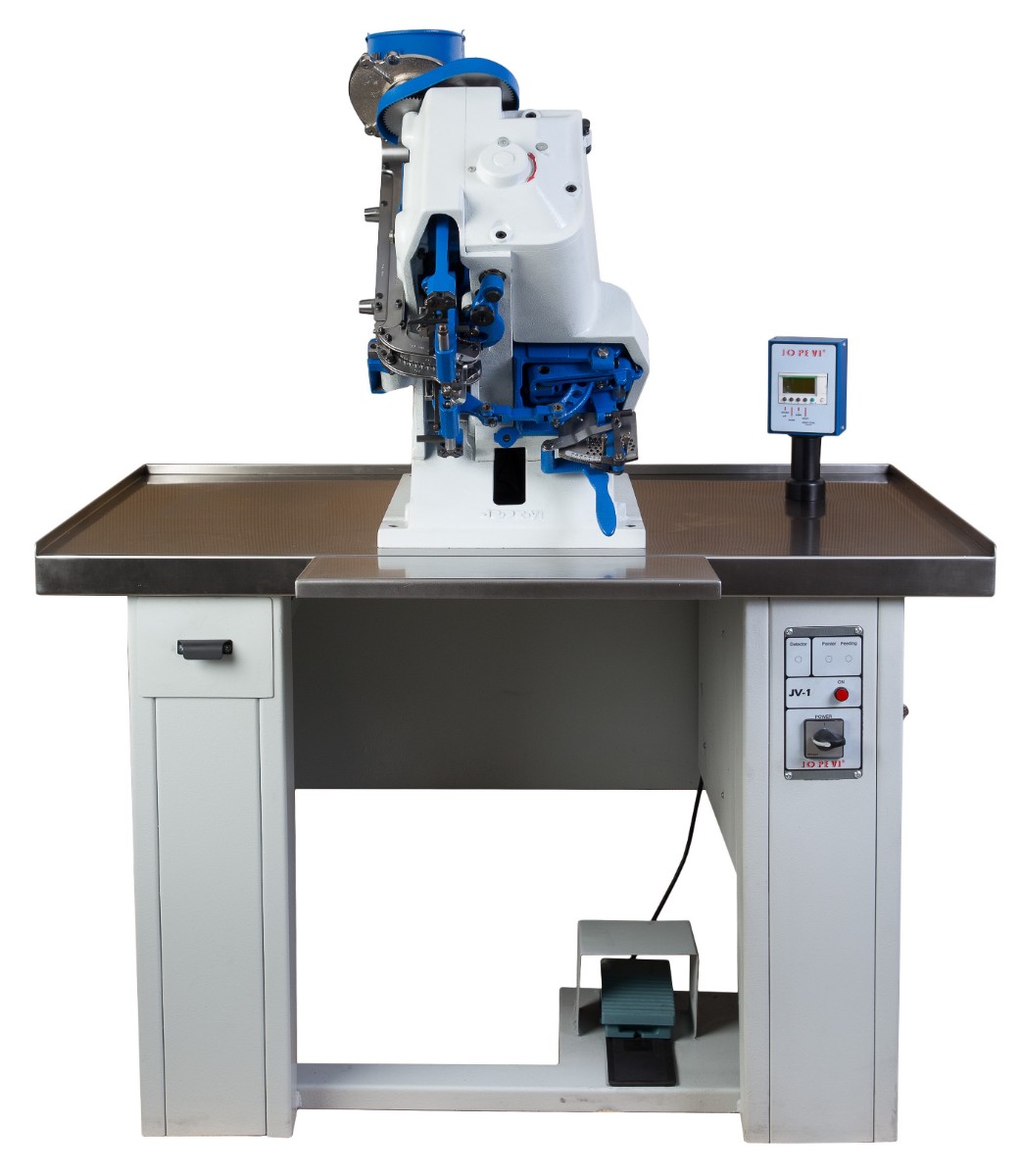
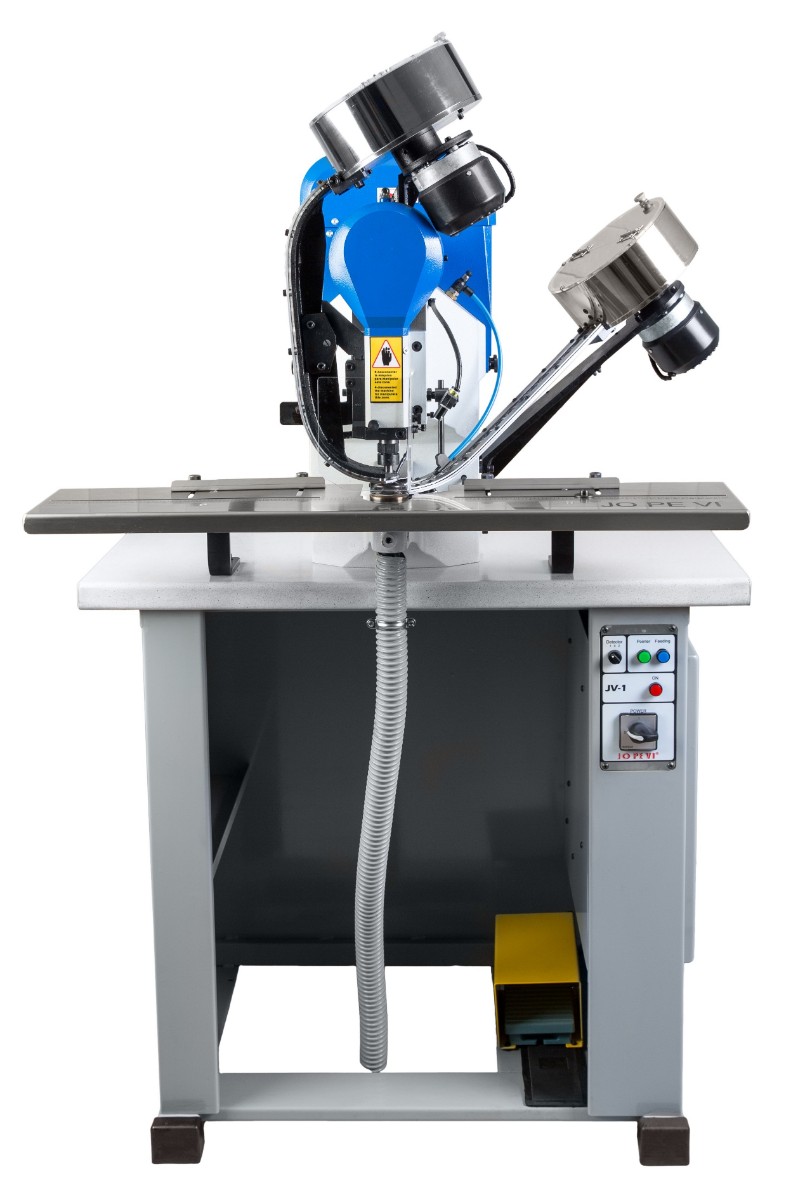
At this point, the choice of equipment makes an important difference. Having machinery designed to work consistently, adapt to different materials and make precise adjustments easier helps reduce incidents at source. For those who want to learn more about industrial solutions of this type, it may be useful to consult the JOPEVI catalog of machinery for placing eyelets and rivets, especially if the aim is to strengthen process uniformity without improvisation.
Why at JOPEVI we place so much importance on the precise fitting of grommets
At JOPEVI, we have spent decades seeing how an apparently small detail can shape the overall perception of a product. Grommets are part of the visible finish, but also of the product’s strength and performance in use, which is why we know that irregular fitting not only creates defective parts, but also doubts in production, quality control incidents and commercial problems once the goods leave the factory.
Our experience alongside companies in footwear, leather goods, garment manufacturing and other sectors has taught us that errors tend to repeat themselves when the process is not sufficiently controlled. Sometimes the problem begins with incorrectly adjusted pressure. At other times, it appears because of a lack of uniformity between operators, tools that are not suitable for the material or equipment that cannot maintain constant repetition. Industrial reliability does not depend on a single factor, but on how the machine, the settings and the inspection criteria work together.
That is why we support a practical approach, focused on prevention rather than correction. A well-prepared line makes it possible to detect deviations in the first units, make adjustments before the batch moves forward and maintain a recognisable standard throughout the entire order. This logic is especially valuable in production for third parties, private labels or export, where a return does not only involve a direct cost, but also tension with distributors, loss of time and damage to trust.
When a company invests in more stable production, it is not only looking for speed. It is looking for repeatability, confidence in the finish and fewer surprises at the end of the process. In our history as machinery manufacturers in Elche, working since 1969 and close to the industrial fabric of footwear and leather goods, we have seen that the best way to protect final quality is to treat the fitting of grommets as a critical operation within the production system, not as a minor detail to be solved at the end.
- Phone: +34 966 65 10 08
- Email: info@jopevi.es
- Address: C/ Nicolás De Bussi, 32 (Elche Parque Empresarial), Elche, Alicante, España