How to make work in the grommet area more attractive to new generations
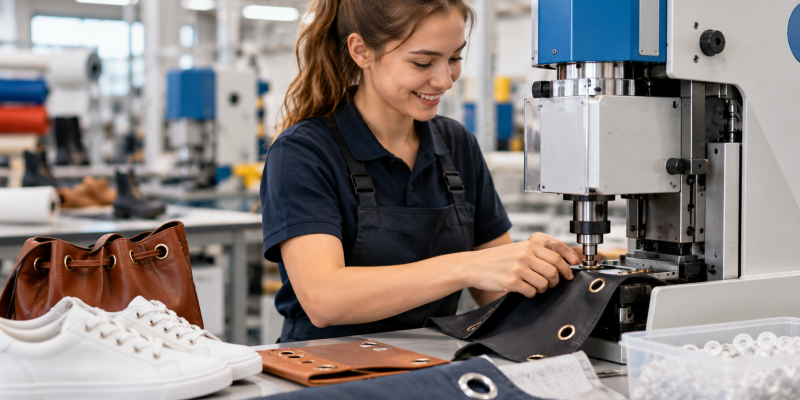
If the grommet workstation still depends on repetitive movements, discomfort and learning based only on accumulated experience, perhaps the question is not why it is difficult to bring in a new generation, but how that job is designed today. In many factories, the appeal of a workstation does not depend solely on the final product, but on something much more everyday, such as how easy it is to learn, how orderly the environment is and the feeling of control during the working day.
This is especially visible in areas such as eyelet placement, where for years it has been assumed that certain tasks had to be manual, demanding or unrewarding. However, a modern factory no longer values only how much a workstation produces, but also how people work in it. This is where machinery, process organization and ergonomics begin to carry strategic weight.
For a production manager or purchasing decision-maker, this reflection goes far beyond filling a vacancy. It is about asking whether the area is ready to bring in a new person without turning learning into a barrier, whether the daily routine supports concentration or creates unnecessary fatigue, and whether the workstation helps retain talent instead of wearing people down from the start.
In the end, when a company renews this part of the process, it is not just updating a piece of equipment. It is also redefining the operator’s daily experience, something that influences adaptation, work quality and the way that workstation is perceived within the factory.
What does the grommet area reveal about a factory that wants to train people better?
The grommet area may seem like one specific detail within the production chain, but it often acts as a mirror of the entire system. When this area runs smoothly, the material arrives properly prepared, the workstation is clear, the machine is quickly understood and the person working there knows what to do without relying on constant instructions, it is immediately clear that there is a more mature view of the process.
By contrast, when the area builds up small points of friction, very familiar factory situations appear. Parts arrive out of order, repeated movements force operators to correct their posture, downtime occurs because the operation interrupts the line rhythm, or doubts arise constantly during learning. They are not always major failures, but they are signs that the workstation can be improved.
That is why, when assessing a new machine, it is worth looking beyond speed or pure output. What matters a great deal is how it supports the operator during the task, whether it simplifies steps, reduces unnecessary repetition and helps make the learning curve more reasonable. A workstation that is learned faster and operated more clearly not only makes onboarding easier, it also reduces dependence on very specific profiles.
The overall order of the environment also has an influence. In areas where every tool has its place, where the flow of materials has been thought through and where the operation does not require constant improvisation, work becomes more predictable and less stressful. A sense of order is a form of efficiency that is often underestimated, although in practice it has a major impact on everyday work.
Ergonomics deserves similar attention. It is not just about comfort in a superficial sense, but about avoiding forced postures, unsupported repetitive movements and accumulated fatigue at the end of the shift. When an investment helps the operator work more naturally, that improvement is also reflected in consistency and finish quality.
Another important issue is the automation of repetitive tasks. In many cases, automation does not mean taking value away from the workstation; quite the opposite, because it frees the person from mechanical movements and allows them to focus more on process control, correct placement and work continuity. This evolution means the workstation is no longer perceived as a rigid task and starts to be seen as a more integrated function within a modern factory.
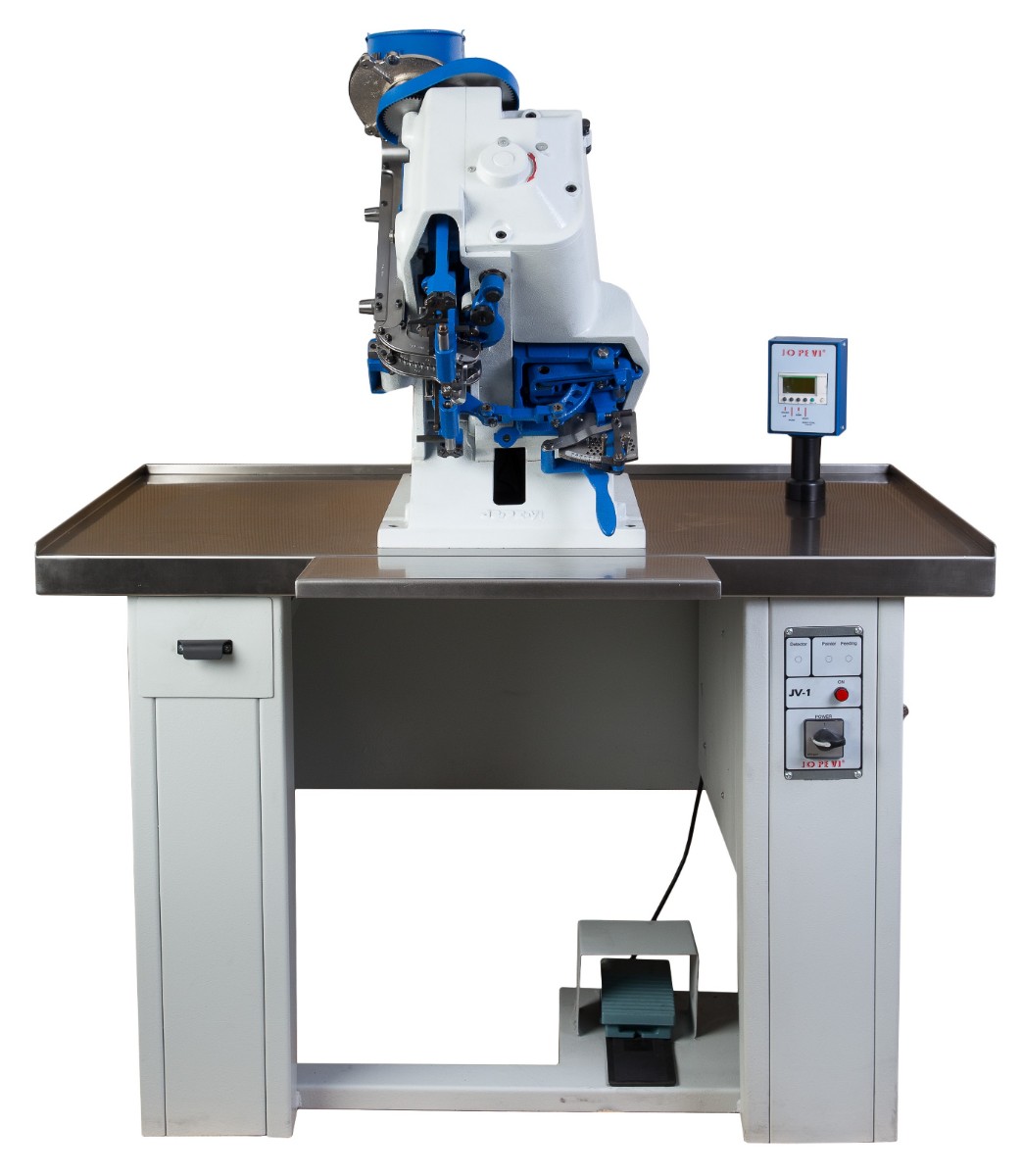
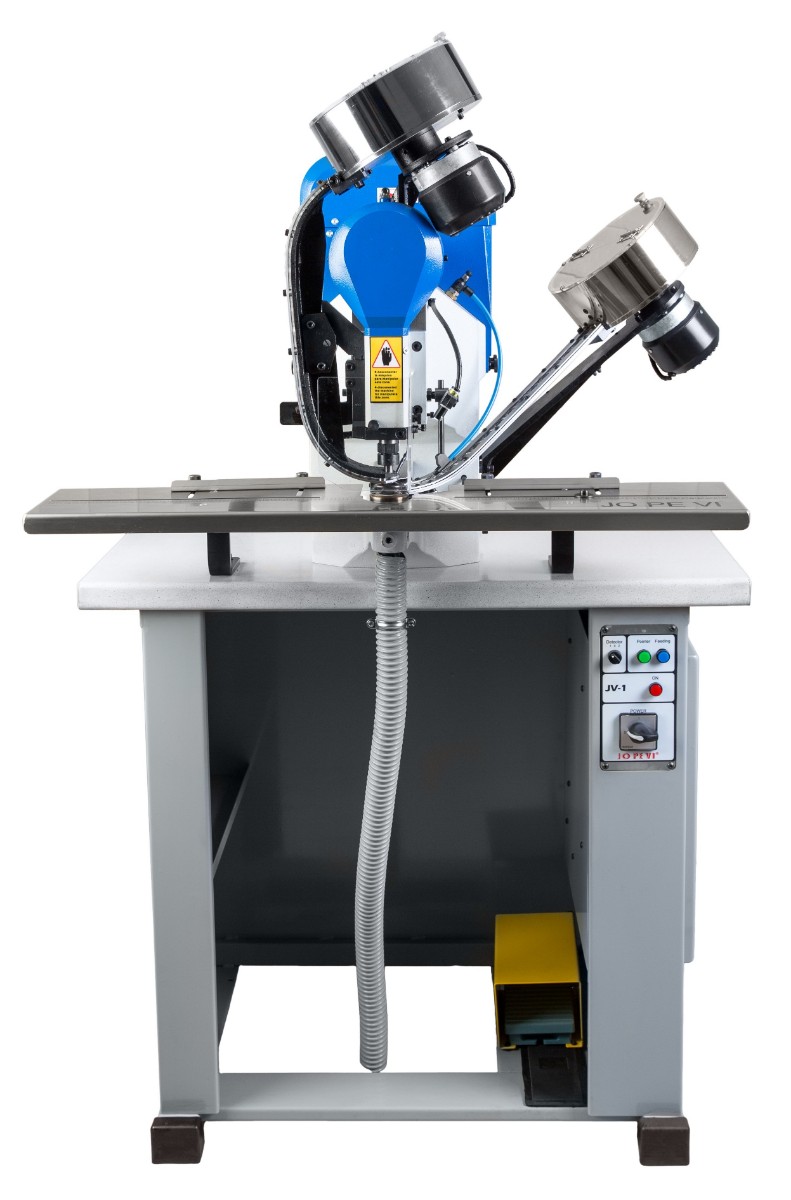
If you want to better understand how this type of machinery has evolved and why accumulated experience makes a real difference on the shop floor, it may be useful to learn about the background of a manufacturer specialized in eyelet machinery.
What we have learned about grommet after decades close to real production
At JOPEVI, we have spent years seeing how factory work changes and how grommet, machinery and workstation organization are much more closely related than they may sometimes seem. Since our beginnings in 1969, first as a repair workshop and later as specialized manufacturers, we have seen that many purchasing decisions do not only solve a technical need, but also transform the way a person experiences their work every day.
We work closely with sectors such as footwear, leather goods and garment manufacturing, where production pace coexists with demands for precision, repetition and adaptation. This closeness has taught us that a well-chosen machine not only fits into the process, it also helps make the workstation easier to teach and more reasonable to maintain. And that matters greatly when a company wants to bring in and train new operators using more up-to-date criteria.
That is why, when we advise a client, we do not think only about the operation the machine has to perform, but also about the context in which that machine will work. The available space, the type of material, the input and output flow, the interaction with other stages of the process and, above all, the experience of the person who will use the equipment every day all matter. This broader view often opens up very useful questions for any factory.
One of them is simple, although not always comfortable. Does your work area allow a new person to learn safely and consistently, or does it still depend on tricks, accumulated effort and constant corrections? The difference between a workstation that integrates people well and one that wears them down often starts with the design of the environment itself, not only with the attitude of the person joining the team.
We believe this is where an important part of the future of the grommet area lies. Not in making it artificially attractive, but in making it clearer, more orderly, more ergonomic and more consistent with the factory you want to build over the coming years. Seen in this way, investing in machinery stops being only a production matter and also becomes a decision about work culture, learning and continuity.
- Phone: +34 966 65 10 08
- Email: info@jopevi.es
- Address: C/ Nicolás De Bussi, 32 (Elche Parque Empresarial), Elche, Alicante, España