From 50 to 500 pairs a day: how a small factory improves flow by automating grommet setting
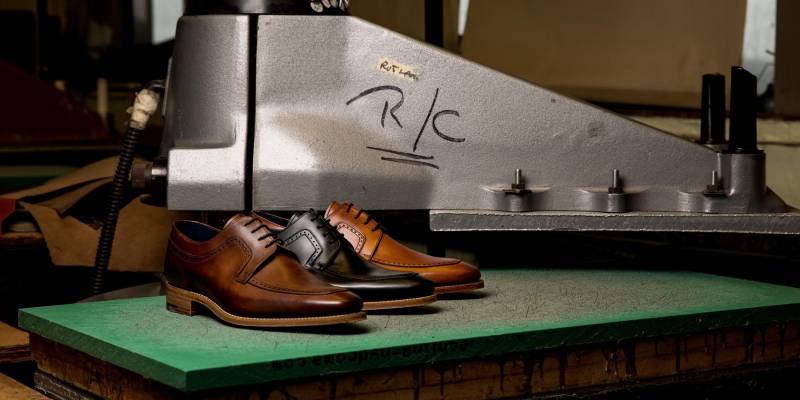
When the grommet comes into play on your footwear line, you’re not talking about a minor detail. You’re touching a point that affects pace, finish, and coordination between operators. In workshops producing short or medium runs, that stage often seems simple—until it starts slowing everything else down.
In footwear manufacturing, a manual or poorly organised task ends up creating waiting times, repetitions, and pieces that need checking. That becomes especially noticeable when your production wants to move from almost handcrafted work to a stable daily routine. And that’s where automation starts to make real sense.
We see it often in companies working between 50 and 500 pairs a day. They don’t need a huge structure, but they do need a cleaner, more consistent, easier-to-control process. That change doesn’t only affect timings; it also changes how the workshop feels. Everything fits together better.
- Typical applications in sneakers, casual footwear, sportswear, and lace-up lines.
- Critical points in finish consistency, repeated movements, and quality control.
- Visible improvements in workstation organisation, work sequence, and production stability.
When a small phase stops interrupting the whole, your factory starts to breathe differently.
The problem with setting the grommet without an optimised process
The grommet looks like a quick operation until it’s repeated dozens or hundreds of times in the same shift. Then misalignments, downtime, and that quiet wear-and-tear appear—affecting both the operator and the rest of the flow. You don’t need a huge bottleneck to lose order; one irregular phase is enough.
In many footwear workshops, the issue isn’t only taking longer. It’s also the variation from one piece to another, the need to correct positions, or the dependence on one highly experienced person. What happens when the order increases and the method stays the same? Usually, the workshop becomes more tense.
The most common issues tend to repeat in similar scenarios.
- Uneven pace between prep, punching, and setting.
- Inconsistent finishes that force re-checking pairs already in progress.
- Repeated errors due to fatigue or constant handling.
- Difficulty scaling without adding disorder to the station.
That’s why many factories aren’t just trying to go faster—they want to work with more calm and more consistency.
How production changes when you automate grommet setting
With the grommet integrated into an automated system, the feeling on the shop floor changes from the very first moment. The task stops depending so much on steadiness, fatigue, or manual repetition, and becomes part of a more stable sequence. In footwear production, you notice that well before volumes get big.
The real advantage isn’t only making more pairs per shift. It’s that your team can keep a similar pace for longer, with fewer corrections and a more uniform finish. The operator works better, supervision becomes simpler, and the piece moves to the next phase in a more orderly way.
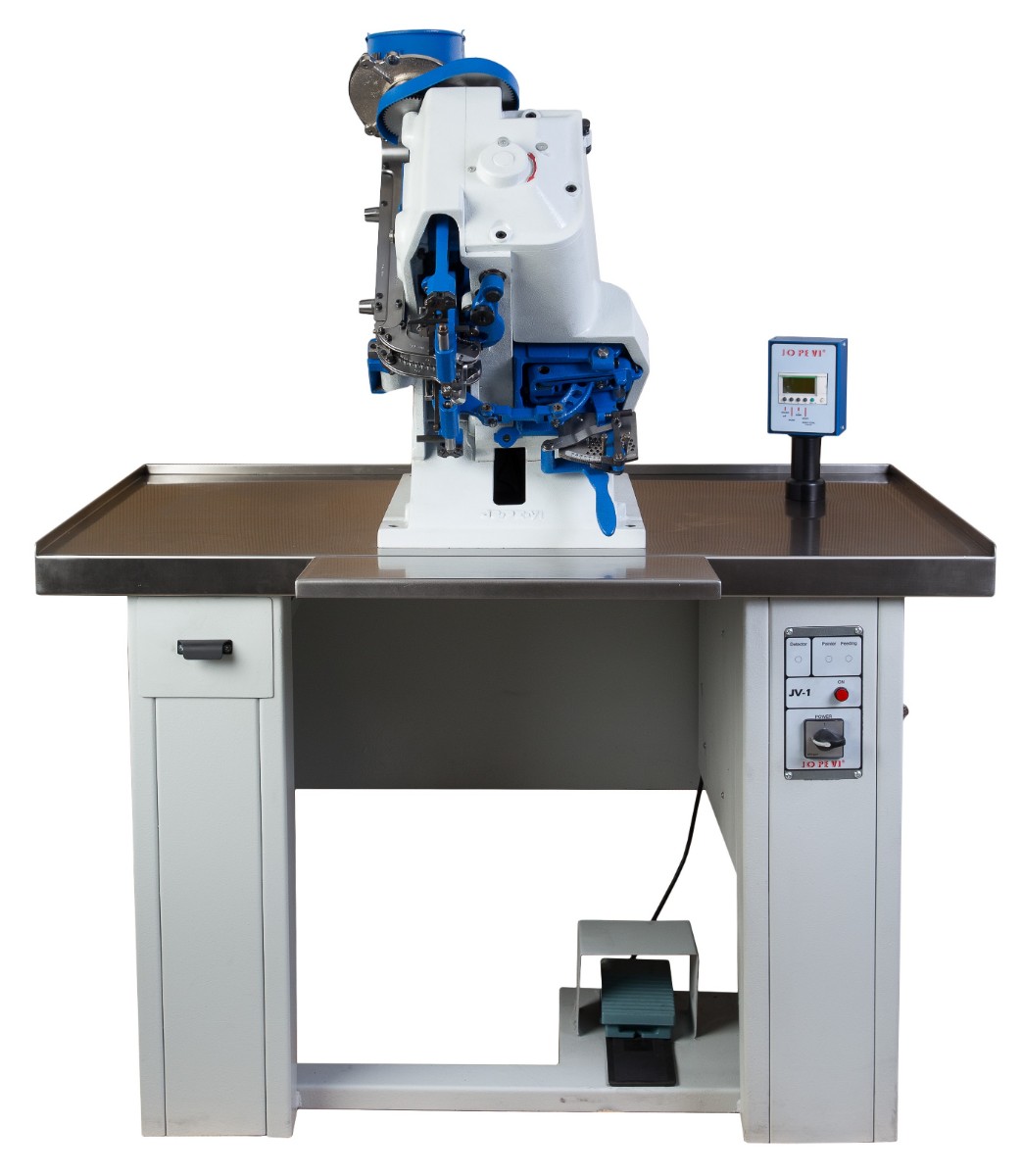
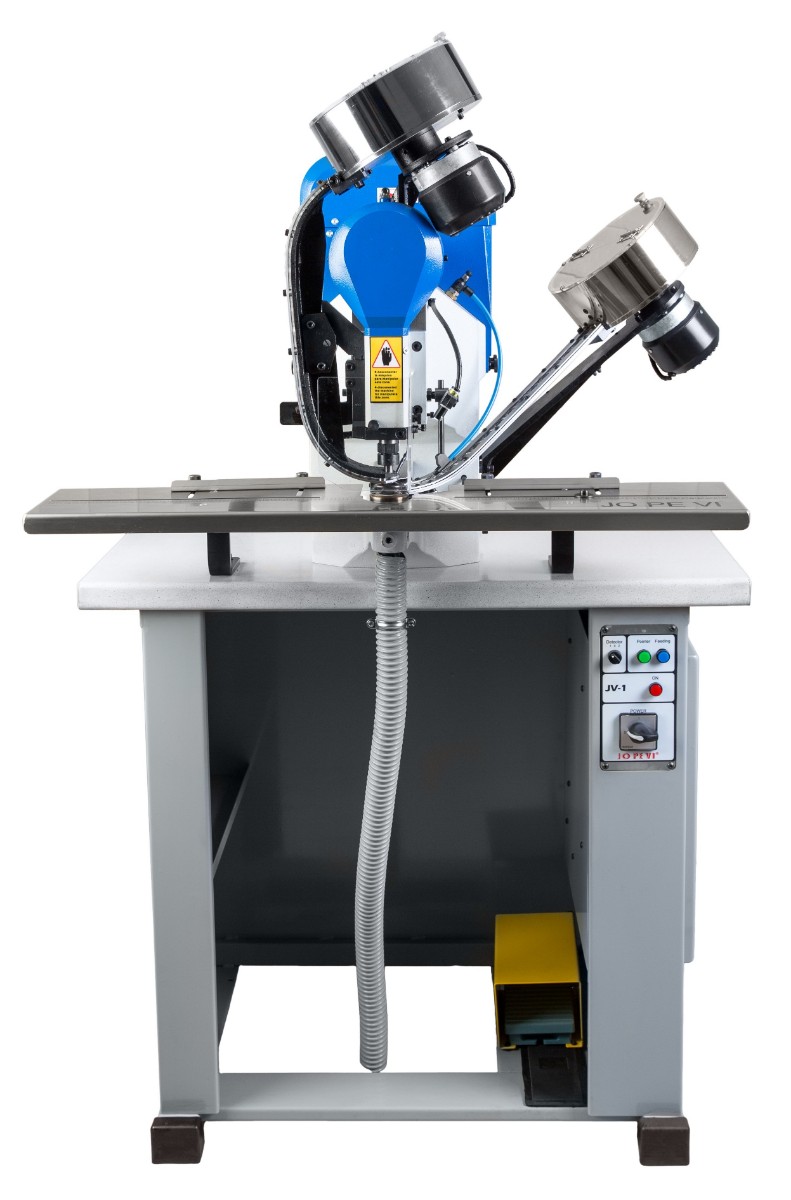
That’s where a machine for setting grommets starts to justify its place in the workshop.
- Fewer interruptions between operations.
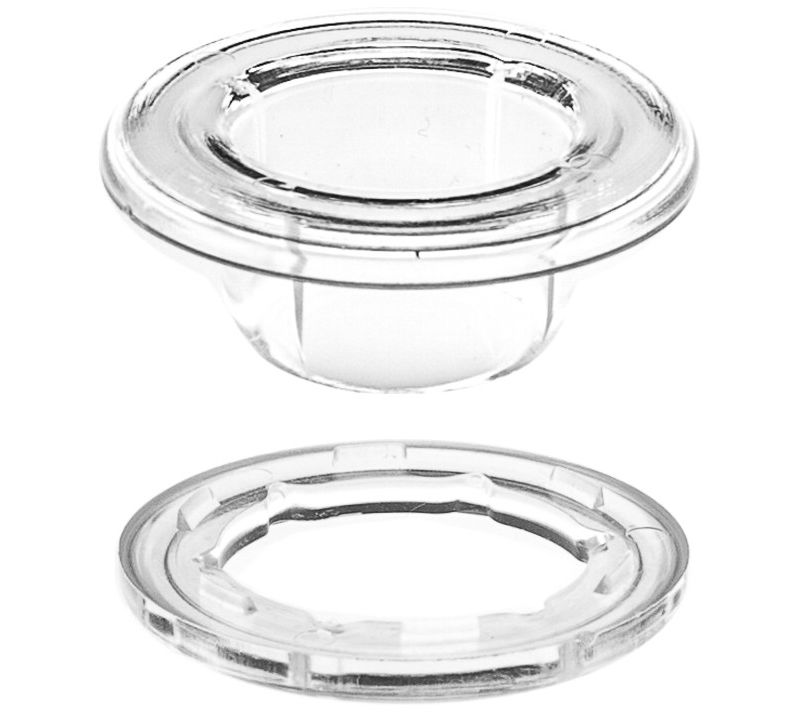
- More consistency in setting eyelets and grommets.
- Less repetitive strain for the operator.
- Better adaptation to low, medium, or growing paces.
When automation is chosen well, it doesn’t complicate your production. It puts it in order.
Machinery for setting grommets based on each factory’s pace
Not every factory needs the same level of automation, and that nuance matters. Some workshops run short references and value direct control. Others need a more continuous base to sustain daily orders without wearing the team down. Choosing well depends on your real production pace, not on a generic promise.
In footwear machinery, it makes sense to think in three scenarios: manual solutions for contained volumes, semi-automatic options to gain stability, and automatic systems when the goal is to consolidate a more consistent flow. That ladder lets you grow without breaking the workshop’s logic.
If you want to explore the full catalogue of machinery for setting grommets, you can see which approach fits your line best.
- Manual machines for stations with lower cadence and close control.
- Semi-automatic versions to improve repeatability and comfort.
- Automatic systems for more continuous, orderly production.
The key isn’t to oversize the investment, but to give your factory a tool that matches its current stage.
From 50 to 500 pairs a day: grow without complicating the workshop
Moving from a few dozen pairs to several hundred a day doesn’t always require expanding the whole plant. Sometimes the change starts by fixing one specific operation that was holding everything else back. In small and medium runs, that often happens with setting eyelets and other components that seem secondary, but set the overall pace.
When one phase becomes stable, planning improves. It becomes easier to distribute tasks, anticipate timings, and reduce build-ups between tables or stations. And that has a direct effect on quality control, because the footwear finish depends less on rush peaks or improvisation.
There’s also a detail many production managers value right away: the workshop becomes more predictable. And working with predictability—on international orders or continuous production—brings a lot of peace of mind.
- Better reading of the flow between operations.
- More production capacity without losing visibility.
- Less rework in later phases.
Growing well isn’t about adding complexity—it’s about removing friction where it repeats the most.
JOPEVI, footwear machinery designed to produce better with grommet
Since 1969, at JOPEVI we’ve worked in the footwear machinery environment, and we know how a workshop evolves when it needs to produce with more order. Our experience as a manufacturer has led us to develop solutions for setting the grommet, eyelets, and rivets adapted to different workloads—from contained volumes to more consistent paces.
We manufacture in Elche Parque Empresarial and distribute internationally. That’s why we understand both the needs of the local workshop and those of buyers in France, Italy, Germany, the United States, Poland, the United Kingdom, Australia, New Zealand, Greece, Denmark, Portugal, or Norway. Is a manual, semi-automatic, or automatic solution better for your case? It depends on how your process is organised and how far you want to take it without losing control.
We work with a range focused on sectors such as footwear, leather goods, garment making, and other environments where workstation consistency matters as much as production capacity.
If you’re looking for a practical answer to improve grommet setting in your factory, we can guide you with clear criteria—without complicating the decision.
- Office: C/ Nicolas De Bussi, 32 (Elche Parque Empresarial), Elche, Alicante
- Phone: +34 966 65 10 08
- Email: info@jopevi.es