From sketch to finished shoe: a real workflow and where the eyelet machine fits
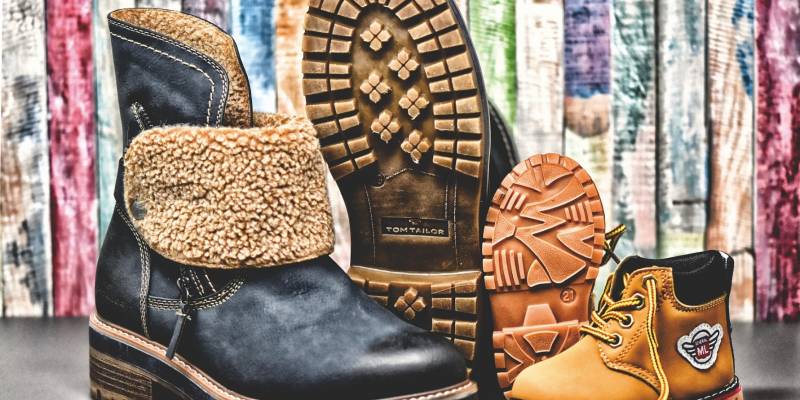
In a footwear factory, the eyelet machine does not show up at the end by chance. It comes in right when the design has already taken shape, and any mistake when setting a piece of hardware can ruin material, aesthetics, and repeatability between pairs.
Everything starts with the sketch, but very soon come the decisions that truly matter in production. The type of leather or synthetic, the thickness of the reinforcement, pattern-making, and the prototype later determine cutting, stitching, and the preparation of areas where eyelets, hooks, or rivets will go.
That is where many bottlenecks become visible. If the pattern is right but the hardware setting does not respect distances, pressure, or alignment, the model loses its presence and the operator has to rework parts that should already be coming out finished.
- Phases that influence this operation the most: design, pattern-making, stitching, and cut preparation.
- Common materials in the sector: leather, synthetics, technical textiles, and combinations for leather goods.
- Real goals on the factory floor: consistency, material protection, and continuity between pairs.
- Frequent applications: lace-up footwear, boots, bags, leather goods, and parts with rivets or washers.
When the process is well thought out, hardware setting stops being a delicate operation and becomes a controlled stage. And in a line that wants to grow without losing finish quality, that makes a big difference.
When an eyelet machine fits into your process, the model gains order from the cut
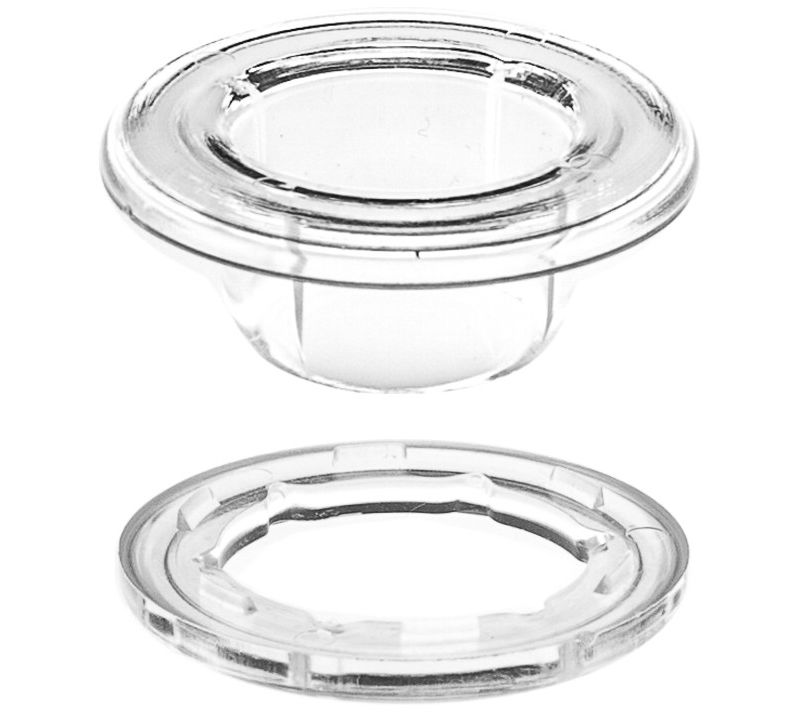
Choosing an eyelet machine for footwear is not about adding an isolated operation. It is about fitting it in right after cut preparation, when the pieces are already stitched or ready to receive eyelets, grommets, hooks, rivets, or washers without deforming the material.
At that point in the workflow, the right solution makes visible differences. Setting becomes more consistent, the design keeps its line, and the material suffers less—key when you work with delicate combinations or models that require repeating the same action throughout the whole run.
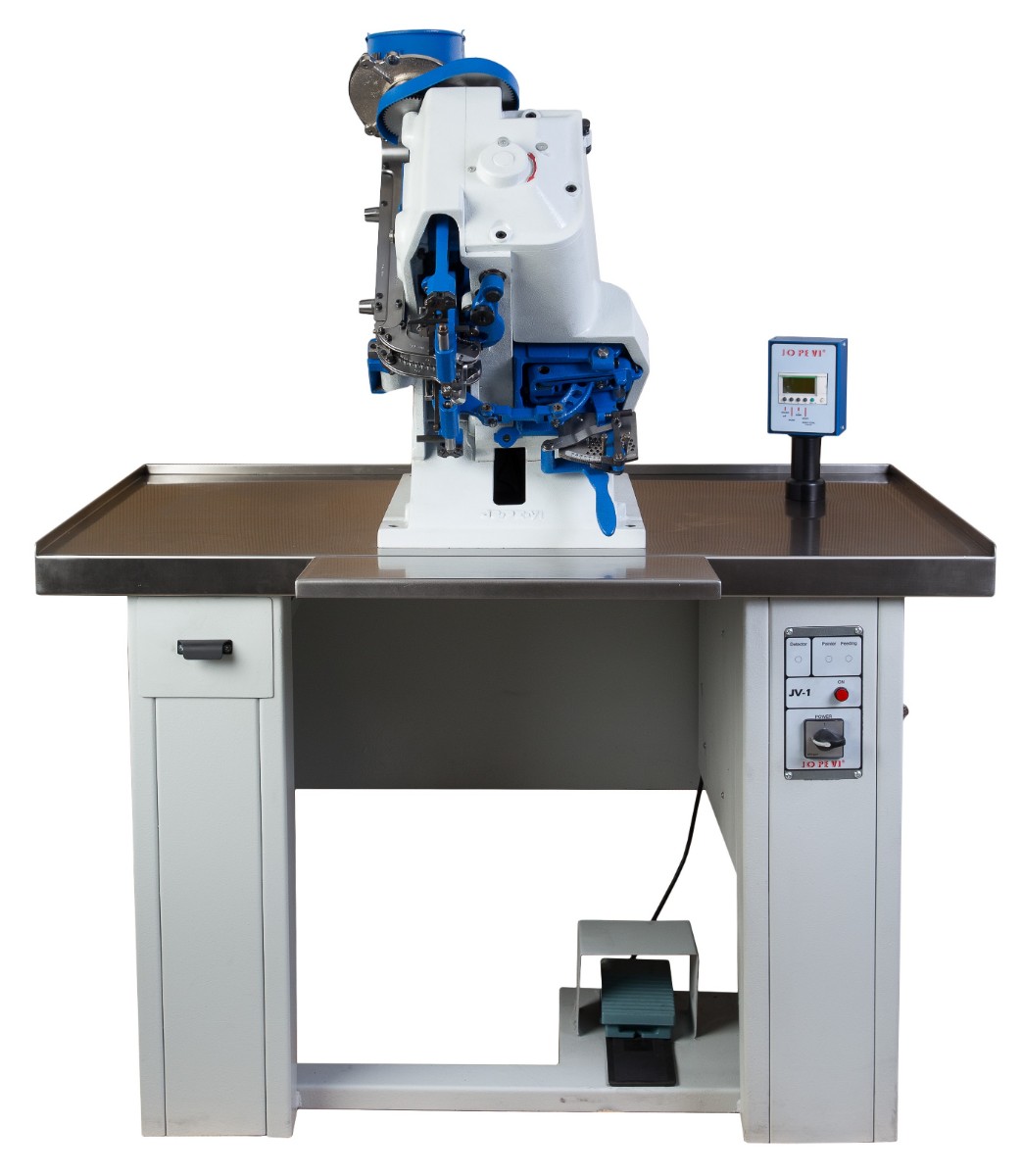
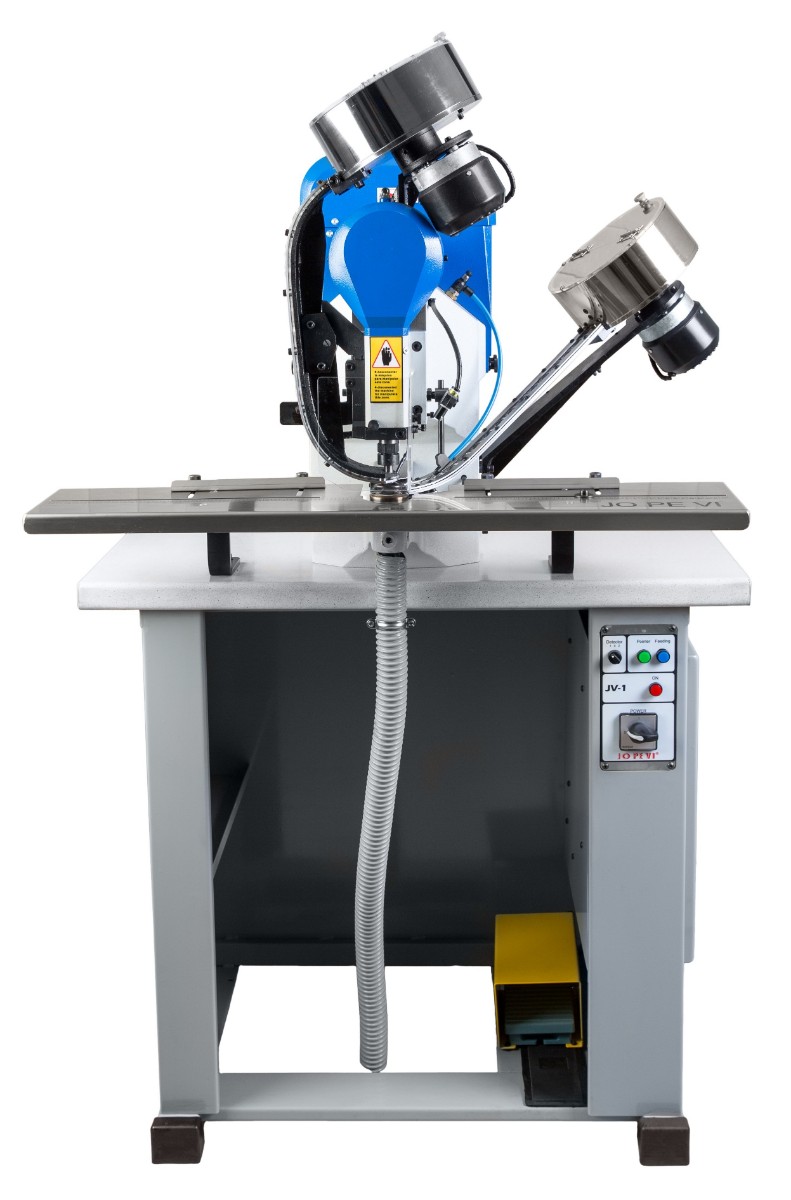
JOPEVI’s catalogue covers very different needs, from workshops starting with short runs to more continuous production. There are manual, semi-automatic, motor-driven automatic, and pneumatic options, as well as specific equipment for different types of hardware.
- J-22 and trolley versions for manual work with direct operator control.
- J-21 and J-25 for pneumatic solutions depending on pace and part type.
- J-228, J-231, J-237, or J-239 within the automatic ranges listed in the catalogue.
The right decision is not always the most complex one. Sometimes, the system that best adapts to how you truly manufacture is enough. Selection based on production volume, material, hardware, and required level of automation.
Our experience with the eyelet machine starts where many factory problems start
Since 1969, we have worked around footwear, so we understand well where a line gets stuck. An eyelet machine is not chosen only from a catalogue, but by how it fits into your work sequence, your material, and the type of hardware you assemble every day.
We started as a footwear machinery repair workshop, and today we manufacture our own equipment in Elche Parque Empresarial. That evolution allows us to talk with you from the real process, not from a generic datasheet, and to guide you in manual solutions as well as pneumatic or automatic ranges.
If you want to understand better our track record as machinery manufacturers since 1969, you will see why we remain so close to sectors such as footwear and leather goods. We also work with international distribution and with a catalogue that includes equipment for eyelets, grommets, rivets, hooks, and washers.
If you are considering an eyelet machine to improve quality and pace without forcing your process, we can help you review which solution makes sense for your workshop or factory.
- Office: C/ Nicolas De Bussi, 32 (Elche Parque Empresarial), Elche, Alicante
- Phones: +34 966 65 10 08
- Email: info@jopevi.es